
Luxury Bathroom Tiling
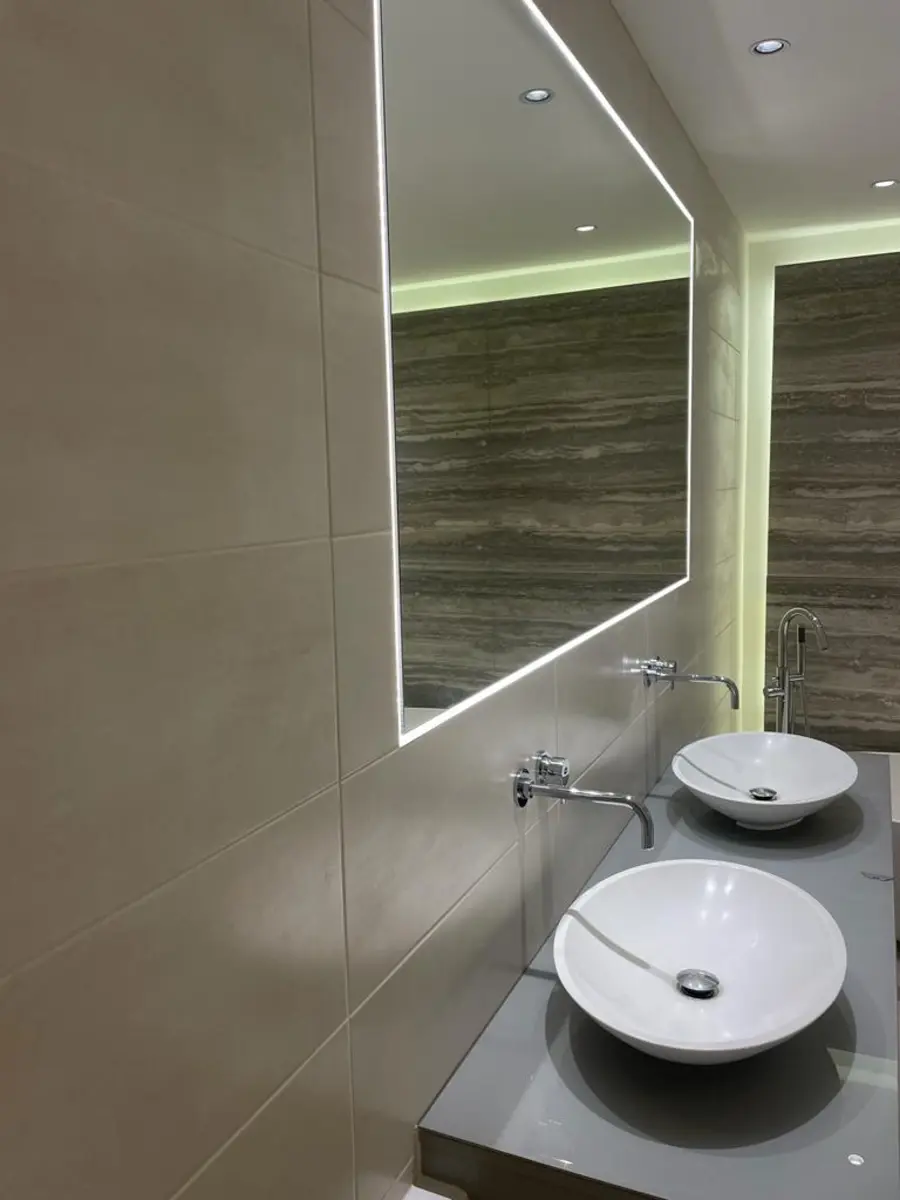
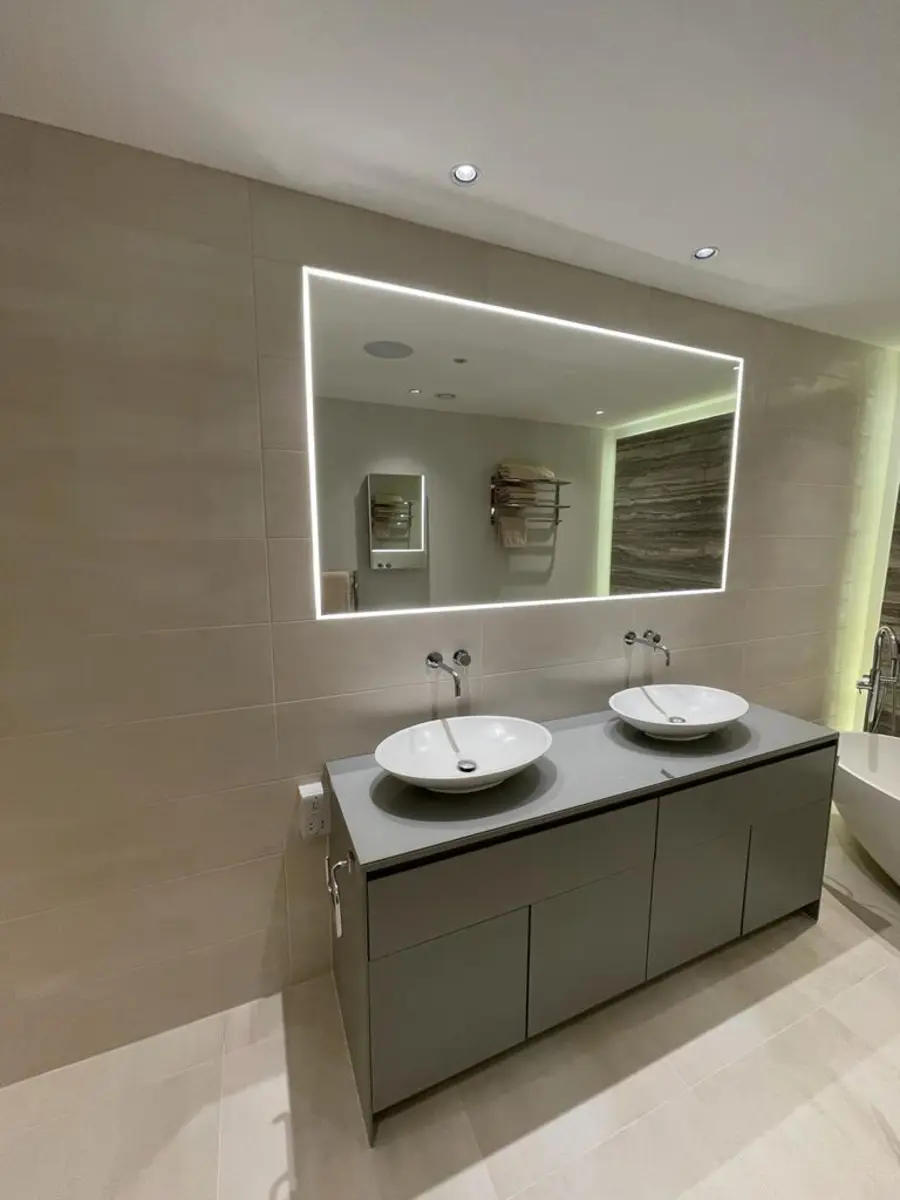
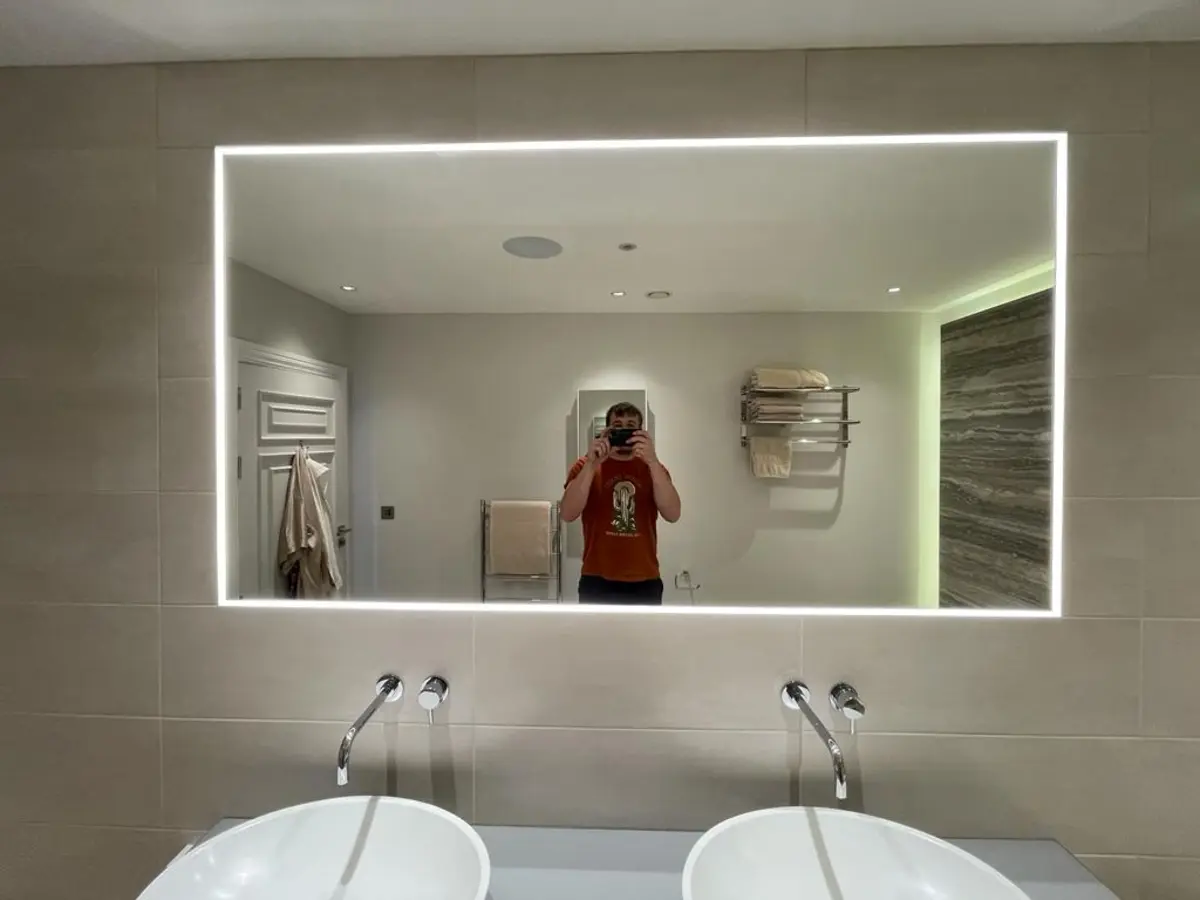
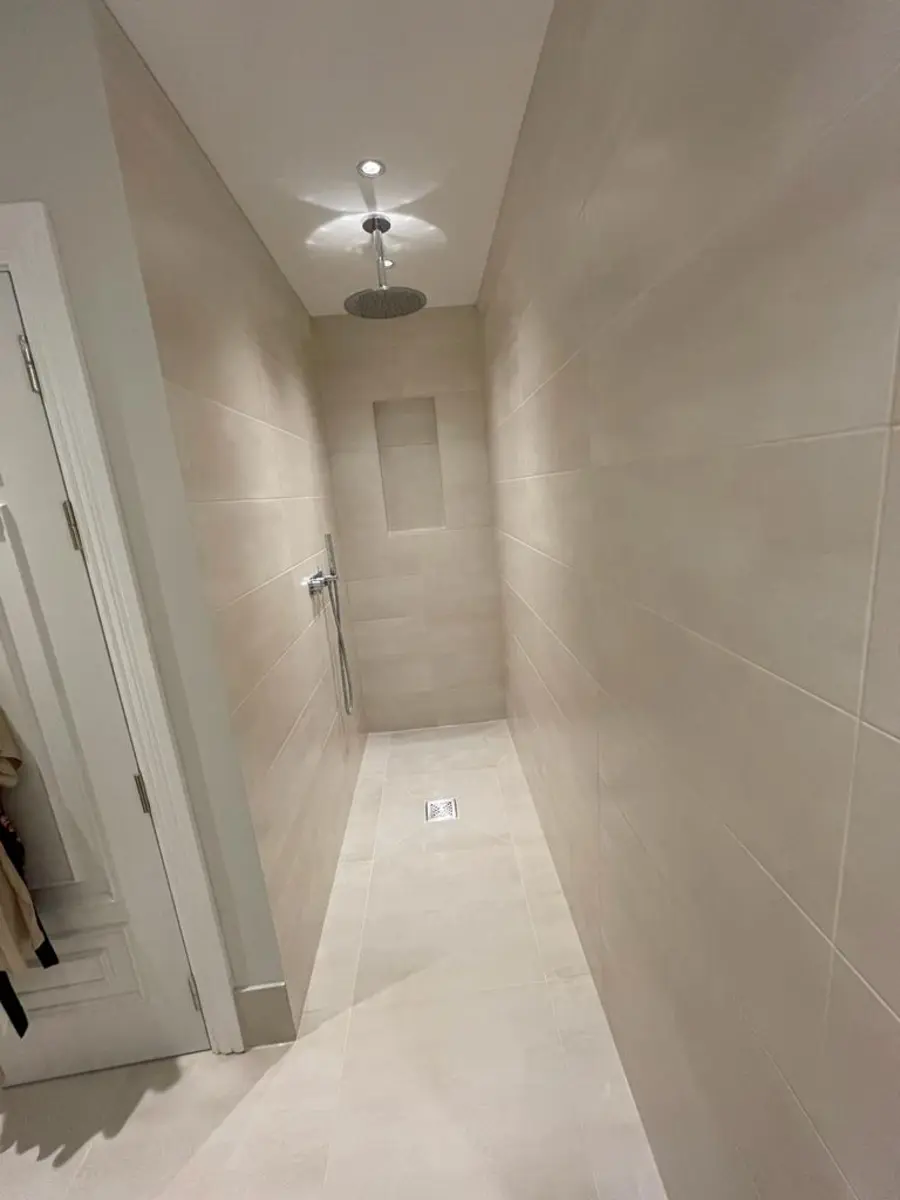
A marble feature wall, double vanity and walk-in shower, set out as one scheme.
Get a QuoteLarge-format stone, and nowhere to hide a cut.
This bathroom is tiled in marble across a feature wall, behind a double vanity and through a walk-in shower. Natural stone in large formats is the least forgiving material in the room: the slabs are heavy, the veining has to be considered across adjacent pieces, and a lipped joint catches the light from across the space.
Setting out comes before anything is fixed. Full tiles land where the eye goes first, cuts are balanced on both sides rather than leaving a sliver in a corner, and the grid is planned around the vanity, the niche and the shower screen.
The substrate decides how long it lasts.
A walk-in shower lives or dies on what is behind the tile. The substrate is tanked — a continuous waterproof membrane taken up the walls and across the floor, sealed at the corners and around every pipe penetration. Grout is not waterproof, and a wet area relies on that membrane rather than on the tile.
Walls and floors were checked for flatness first, because large-format tiles are unforgiving of a substrate out of true and will either lip at the joints or crack later.
Natural stone is sealed before grouting. Skip that and the grout stains the face of the stone permanently.
One continuous scheme.
The finished feature wall, double vanity and walk-in shower are below. Movement joints at internal corners and the perimeter are silicone rather than grout, because those junctions move and rigid grout cracks there first.
Judging a tiled bathroom.
Tiling failures are rarely about the tile. They are almost always about what is behind it and how it was set out.
Ask whether the shower will be tanked. Grout is not waterproof. A wet area relies on a continuous membrane behind the tile, sealed at corners and around pipe penetrations.
Ask how the substrate is checked. Large-format tiles are unforgiving of a surface out of true and will either lip at the joints or crack later, so flatness and movement are checked before anything is fixed.
Look at where the cuts fall. Full tiles should land where the eye goes first, with cuts balanced on both sides rather than a sliver in one corner. That is planning, not luck.
Check the internal corners. They should be silicone, not grout. Those junctions move, and rigid grout cracks there first.
Tell us about your project
Send a few details and we will come back to you with a free, no-obligation estimate.
Contact Us Directly
Phone / WhatsApp
07968 994 595Location
London & Hertfordshire
Working Hours
Monday - Friday: 7:00am - 6:00pm
Saturday: 8:00am - 2:00pm
Sunday: Closed
Bring your walls to life.
Talk to BestFinish about a whiteboard wall installation — we'll survey the space, specify the right product, and give you an honest quote.